You're going to Senegal, or you're thinking about it, and now you're staring at your closet. What do I wear to a mosque? To Gorée Island? On a safari truck, then a beach resort, in the same week? You want to be respectful, you want to be comfortable, and you want the photos. I got you.
What should you wear in Senegal in April? My Senegal trip outfits start with loose linen and cotton that cover your shoulders and knees in town, because Dakar's April highs are about 77°F (25°C), it's humid, and it almost never rains. Add a light layer for the breeze off the ocean at night and a big scarf for sun and dust. For the mosque, wear long sleeves, a long skirt or dress and a scarf over your hair. Pack a swimsuit and a cover-up for the resort in Saly, and wear all white at the Pink Lake if you want the photo.
Key facts
- Our trip: the eight-day Senegal Experience, April 9-16, 2027 and April 7-14, 2028: five nights at the Noom Hotel Dakar Sea Plaza, then two at the Movenpick Resort Lamantin Saly.
- Dakar in April: highs of about 77°F (25°C), lows of about 66°F (19°C), humidity around 82 percent, and on average no rain at all. The ocean is about 70°F (21°C), and a cool wind can still blow in from the sea.
- Saly in April: warmer afternoons than Dakar, with highs in the 80s°F (about 27°C to 32°C, depending on the source), lows around 66°F (19°C), and still dry.
- Dust: the Harmattan, the dry wind that carries Saharan dust across West Africa, blows mostly from late November to mid-March. Senegal's dry season runs longer than that, so a hazy, dusty day in April is possible.
- Modesty: Senegal is a majority-Muslim country. Cover your shoulders and knees in town. At the mosque, women cover their hair, arms and legs, and everyone takes their shoes off.
- Entry: U.S. citizens need a passport valid at least six months past arrival. Americans have entered visa-free for up to ninety days, but Senegal announced a reciprocal e-visa in 2025, so check before you fly (as of October 2026). Coming straight from the U.S., you don't need a yellow fever certificate, though the CDC recommends the vaccine.
Here's what to wear for every part of the trip, day by day. For the full plan, read our day-by-day Senegal itinerary.
What to Wear in Dakar in April
April in Dakar is a lovely kind of warm: sunny, humid, breezy and dry. You'll be comfortable in the day and glad of a light layer at night, when the wind comes in off the Atlantic. The air conditioning indoors can be cold too.
Senegal is a majority-Muslim country, and Dakar is a stylish city. People dress well here. You don't need a special wardrobe, but you'll feel more at ease covered and put together.
- Fabrics: linen, cotton and other light, breathable fabrics. Loose beats tight in the humidity.
- Tops: tees, linen shirts and loose blouses that cover your shoulders. Save the tank tops for the resort, or wear a shirt over them.
- Bottoms: wide-leg trousers, linen pants, or a midi or maxi skirt or dress. Leave the short shorts for the pool.
- The big scarf: one light scarf in your bag every day. It covers your shoulders, your hair at the mosque, and your face when the wind kicks up dust.
- The layer: a light cardigan, a linen shirt or a denim jacket for the evening breeze.
- Shoes: breathable sneakers and sandals with a back strap. Streets can be sandy and uneven, and you'll walk more than you think.
For hotels, food and the practical side of the city, read my Senegal travel guide.
The welcome dinner
You arrive at Blaise Diagne International Airport (DSS) before 3 PM on Day 1, and a driver is waiting with your name on a sign. Check in at the Noom Hotel Dakar Sea Plaza on the Corniche, unpack and rest. At seven, the group heads out to a Dakar restaurant for the welcome dinner: three courses you choose yourself, with bottled water and two glasses of local wine.
The itinerary says casual attire, so don't overthink it. A midi dress with sleeves, or wide-leg trousers and a silk top, with flat sandals or a low block heel and gold earrings. Bring your light layer.
 Photo: Simone Santos (@sithevision) for Caviar in the Air
Your free day
Day 5 is yours. Sleep in, swim at the hotel, or go back to the part of Dakar you didn't finish. The concierge can arrange a spa treatment or a dinner reservation, but those are optional and not included. If you head into the city, the same rules apply: covered and comfortable.
What to Wear to Gorée Island
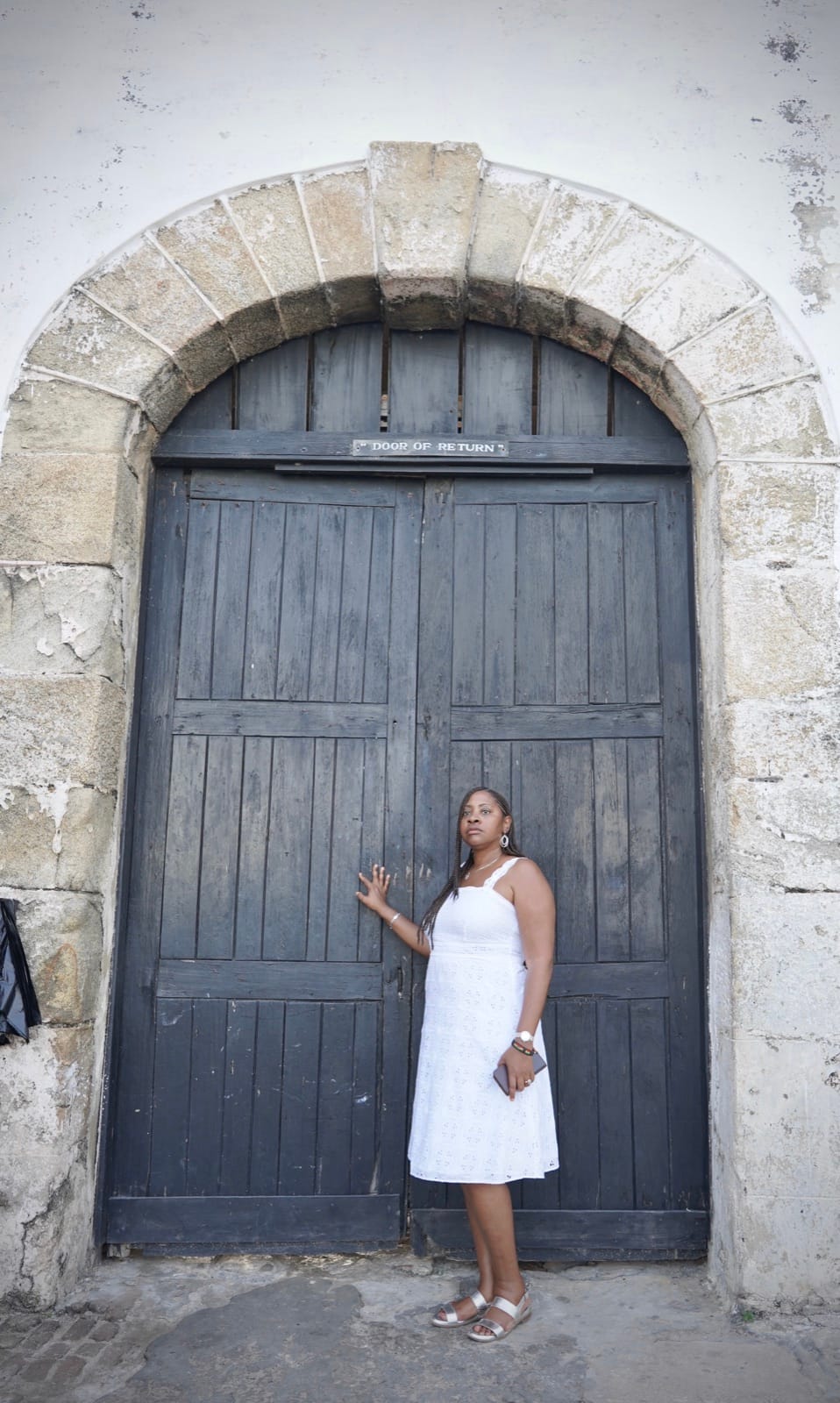
Day 2 starts with the ferry from Dakar to Gorée Island, about twenty minutes across the water. Gorée is a UNESCO World Heritage Site and a place of memory for the Atlantic slave trade. You'll visit the House of Slaves and stand at the Door of No Return. It isn't a light morning, and it isn't meant to be. Gorée Island asks you to take your time.
So dress with respect for where you are standing. Nothing too short or too revealing, and no loud slogans. Then dress for the island itself. There are no cars on Gorée, so you walk everywhere, on lanes of sand and uneven cobbles. If your day includes the walk up to the Castel, the island's high point, that's about fifteen minutes uphill, with little shade at the top.
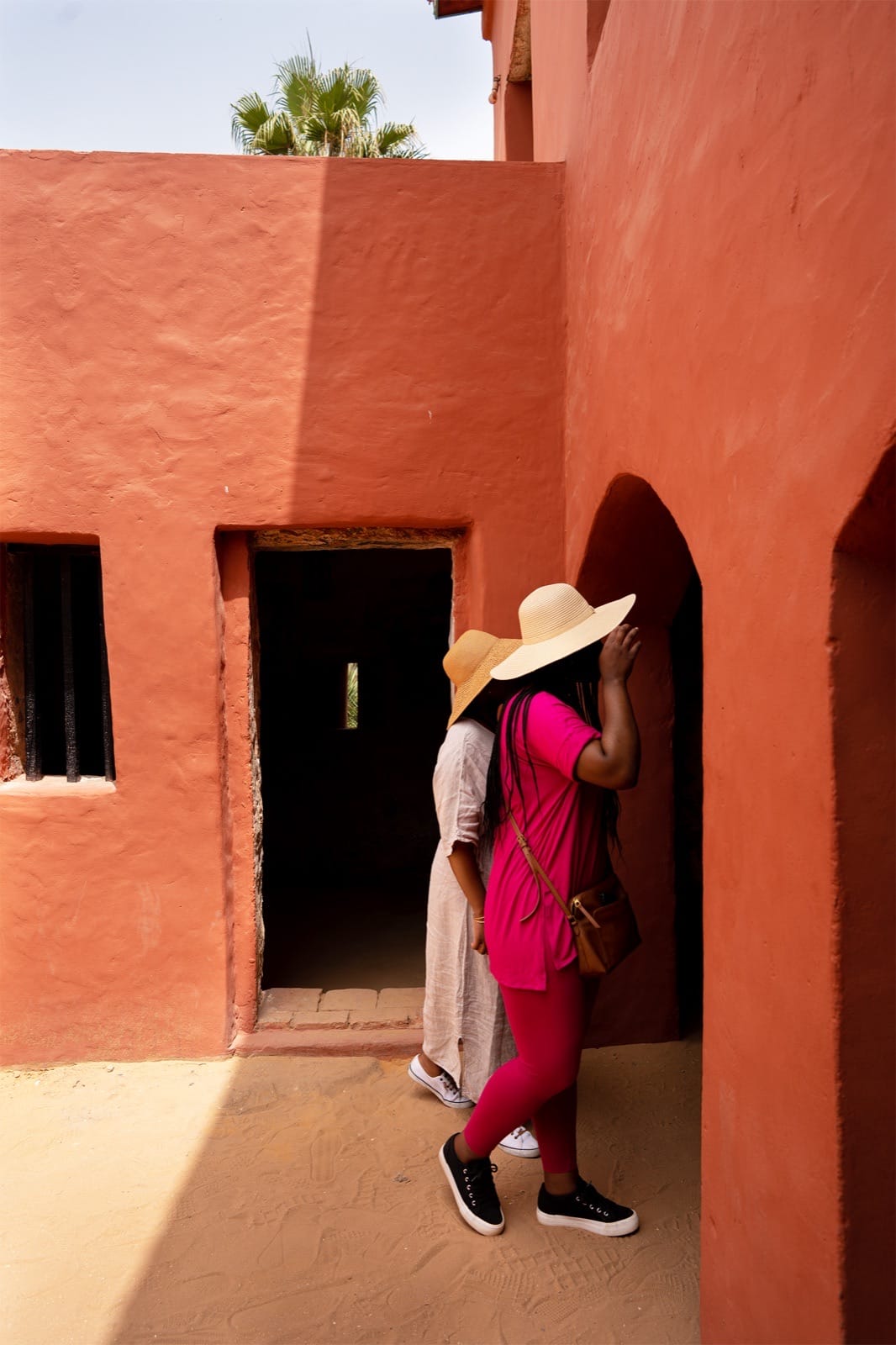 Photo: Simone Santos (@sithevision) for Caviar in the Air
Look at them. Wide straw hats, a long tunic over leggings, a long linen dress, sneakers on both, and a crossbody bag. That's the Gorée formula.
- Shoes: closed sneakers or sturdy sandals with a back strap. Sand gets into everything, and the cobbles are uneven.
- Clothes: loose linen or cotton that covers your shoulders and knees.
- Sun: a wide-brim hat, sunglasses and sunscreen. The sun is strong on the water and on the island.
- The ferry: your light layer or your scarf for the wind on the water.
- Your bag: a crossbody with water, tissues and your scarf.
Back on the mainland, lunch is at the Noom Hotel Dakar Sea Plaza, and then a private tour of the Medina market for local art, fabric and whatever else finds you. The same outfit works: covered, good shoes, and a crossbody bag that zips. If a fabric catches your eye there, keep reading, because I'll tell you what to do with it. Dinner that night is on your own.
What to Wear to the Mosque in Dakar
Day 3 starts at the Great Mosque of Massalikoul Djinane, which opened in 2019 and holds up to ten thousand worshipers in its prayer hall. Then comes the Museum of Black Civilizations, lunch at a family-run Senegalese restaurant, and the African Renaissance Monument in the afternoon. So you need one outfit that works for a mosque in the morning and a hilltop in the afternoon.
Here's the dress code for women visiting the mosque:
- Cover your hair. Bring a scarf big enough to wrap your hair and neck.
- Cover your arms and legs. Long sleeves and a long, loose skirt or dress. Skip tight trousers, short skirts and anything sheer.
- Take your shoes off before you go in. Wear sandals that slip off easily.
- Go outside prayer times, and follow your guide's lead inside.
- Bring your own scarf. Our itinerary notes that coverings are available at the mosque if you need one, but your own is quicker, and it's one you like.
 Photo: Simone Santos (@sithevision) for Caviar in the Air
That's the prayer hall you'll stand in: gold columns, patterned carpet, and a chandelier overhead. Shoes off at the door, scarf on, and take your time.
After the mosque, let the scarf drop to your shoulders for the museum. The African Renaissance Monument stands on a hilltop above the city, and it's about two hundred steps up to its base, so wear sandals you can climb in, not slides, and bring water and your hat. Dinner that night is on your own.
What to Wear on Safari and at the Pink Lake
Day 4 starts with an early breakfast and about an hour's drive to the Bandia Reserve, for a safari among giraffes, zebras, rhinos and whatever else the morning turns up. You ride in an open-sided safari truck on dirt tracks. Then comes a three-course lunch with wine at the restaurant inside the reserve.
In the afternoon, a 4x4 takes you along the shore of Lac Rose, the Pink Lake. Its color comes from a salt-loving microalga, Dunaliella salina, which makes a red pigment when the water is very salty and the sun is strong. The pink shows best in the dry season, which runs from November to June, so April is a good month for it. The color shifts with the light, the wind and the salt, so I won't promise you a particular shade of pink. Salt harvesters still work the lake by hand.
Our itinerary has one piece of style advice for this day: wear all white at Lac Rose if you want the photographs everyone comes back with.
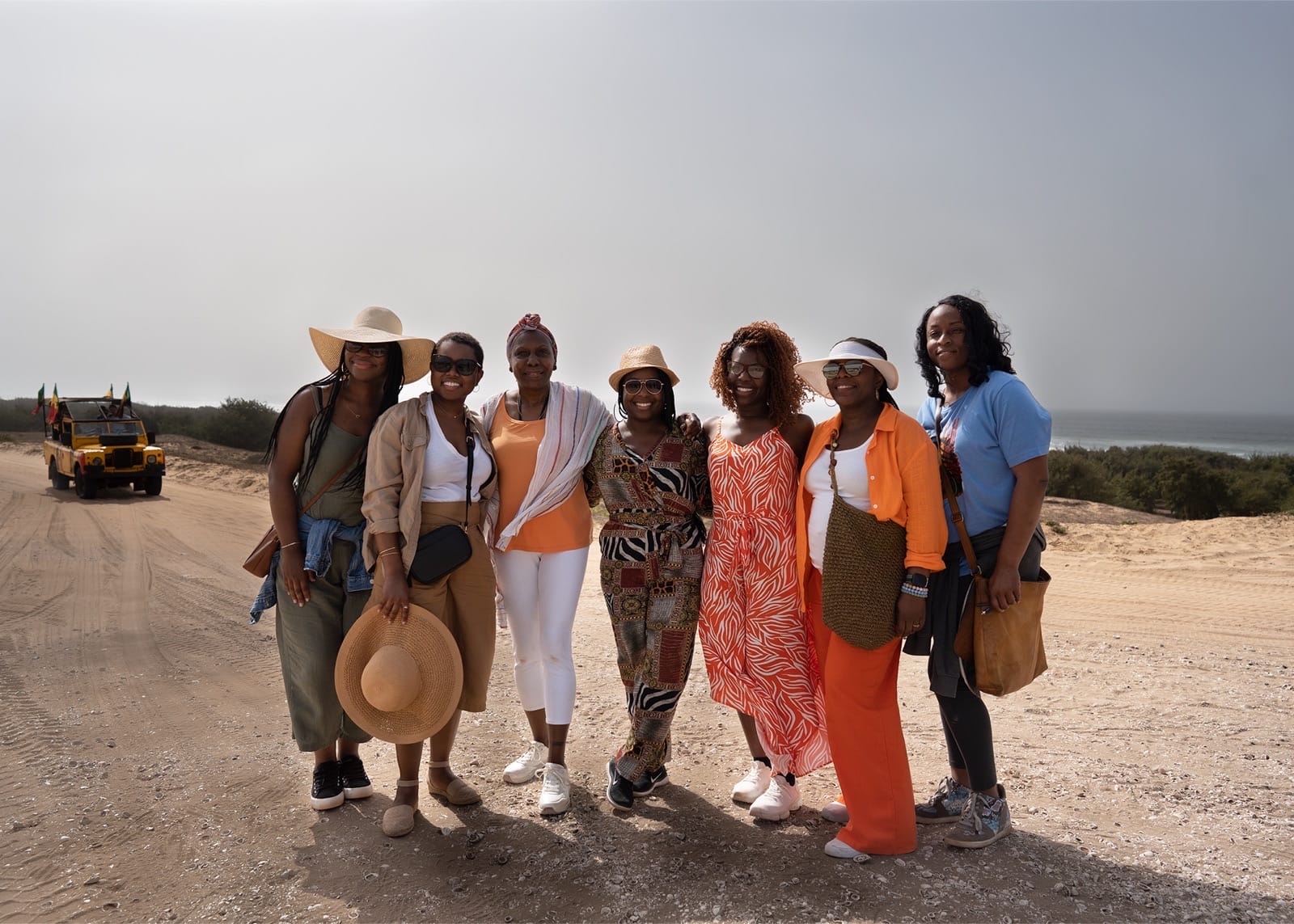 Photo: Simone Santos (@sithevision) for Caviar in the Air
Look at the sky in that photo. That's a hazy dry-season day. Wide straw hats, a visor, linen trousers, an orange print maxi, sneakers and crossbody bags, with the 4x4 waiting.
- The all-white plan: a white linen set or a long white dress. Dust and white don't get along, so wear a loose shirt over your white in the safari truck, or change before the lake. Pack wipes.
- Layers: a loose long-sleeve shirt over a tank. It's sun cover in the truck, and it comes off for the photos.
- A hat that stays on: a wide-brim hat with a cord, or a visor. Open trucks and 4x4s are windy.
- Sunglasses and your scarf, for the sun, the wind and the dust.
- Shoes: closed sneakers. Sandals fill up with sand.
- Your bag: a crossbody with water, sunscreen and wipes.
What to Wear in Saly
Day 6, you check out after breakfast and drive south. On the way, you stop at Joal-Fadiouth, the shell island, where the ground is built from centuries of shells and Christian and Muslim families share the same small streets. People live here, so dress the way you would to visit someone's neighborhood: shoulders and knees covered, and sneakers or sturdy sandals, because walking on shells is crunchy and uneven.
Then it's lunch by the water in Saly and check-in at the Movenpick Resort Lamantin Saly, where dinner that night is at the hotel. Day 7 is a free day at the resort: the infinity pool over the Atlantic, the private beach, kayaks and paddleboards, and tennis. Spa treatments are optional and not included, so book ahead if you want one.
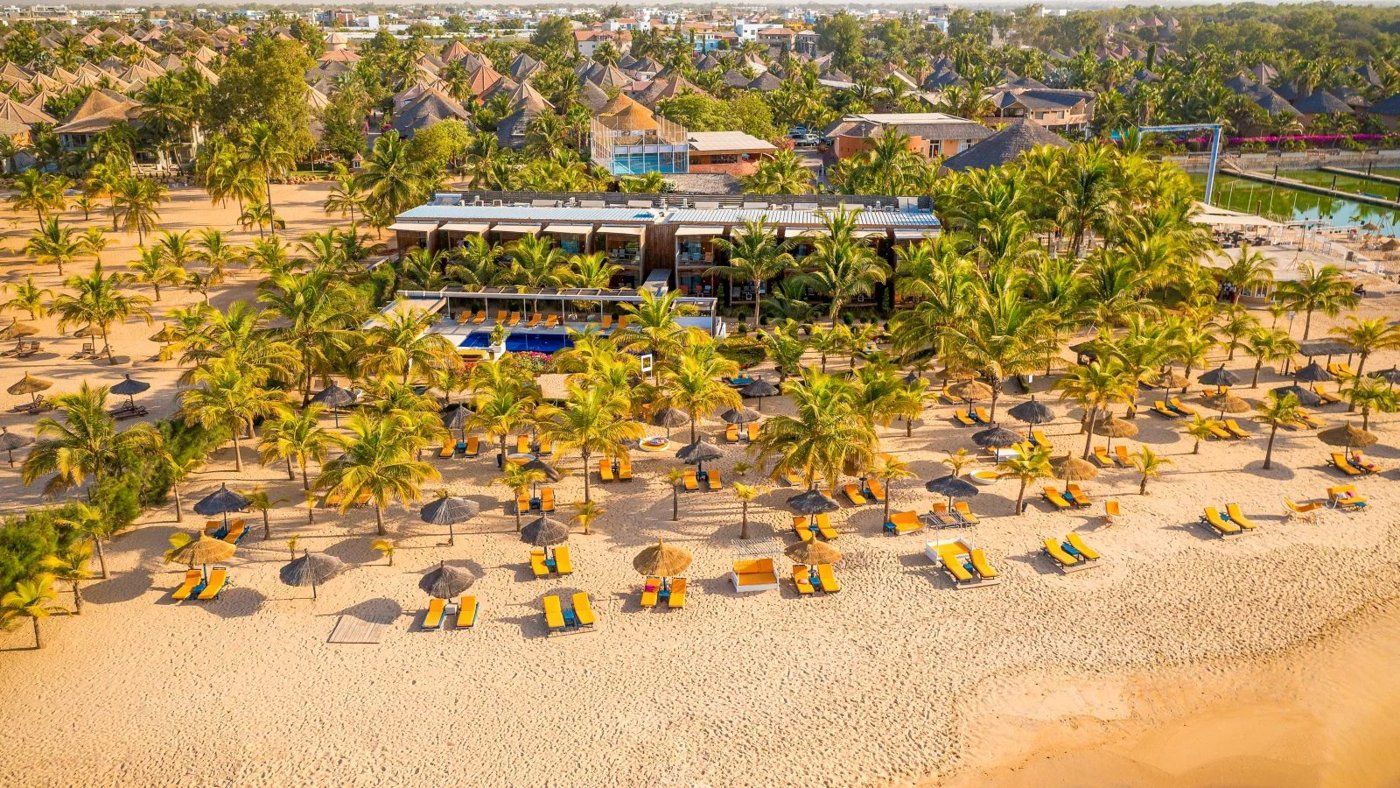
- Two swimsuits, so one is always dry.
- A cover-up for walking through the resort to lunch.
- Slides or flip-flops, and a wide-brim hat, sunglasses and sunscreen.
- Something for the water: the Atlantic is cool in April, about 70°F (21°C), so you may want a rash guard or a light cover-up after a swim.
- Off the resort, put a dress or your cover-up on over your swimsuit. Swimwear belongs at the pool and on the beach.
The farewell dinner
At seven on Day 7, the group comes back together for the farewell dinner by the sea. It's the last night with your group, so this is the night for your best look. A flowy maxi in a bold color or a print, gold jewelry, flat sandals that can handle a little sand, and a wrap for the breeze. If you had something made in Dakar, this is where you wear it.
The flight home
Day 8 is a last breakfast, time for a swim or the last of the souvenir shopping, and then your private transfer to DSS, with departures any time after 8 AM. Dress for the plane:
- Soft joggers or wide-leg pants and a long-sleeve top.
- Your bulkiest pieces, worn on the plane so they stay out of your suitcase.
- Compression socks.
- A satin scarf or bonnet for your hair.
Senegal Outfit Ideas for Black Women
Senegal in April is red earth, pale sand, baobabs, a blue ocean, a pink lake and a capital that loves color. Bright color, prints and gold jewelry pop against all of it, and so does our skin. Here are my Africa travel outfits for Black women, the formulas I'd pack for this trip.
- The city day: wide-leg linen trousers, a loose tee or linen shirt, breathable sneakers, sunglasses and a crossbody bag.
- The Gorée morning: a long linen dress, or a long tunic over leggings, with a wide straw hat, sneakers and a crossbody bag.
- The mosque day: a long, loose maxi dress with long sleeves, a big scarf over your hair, and sandals that slip off.
- The safari: a bright linen shirt over a white tank, wide-leg trousers, a visor or a hat with a cord, and closed sneakers.
- The Pink Lake: all white, in a linen set or a long dress, with gold hoops, sunglasses and a wide-brim hat.
- The color moment: a print jumpsuit or a print maxi skirt, white sneakers and big earrings, on the beach near Lac Rose.
- The welcome dinner: a midi dress with sleeves, or wide-leg trousers and a silk top, with flat sandals or a low block heel, gold earrings and a light layer.
- The resort day: a swimsuit in a bold color, a sheer cover-up, slides and a wide-brim hat.
- The farewell table: a flowy maxi or the outfit you had made in Dakar, gold jewelry, flat sandals and a wrap.
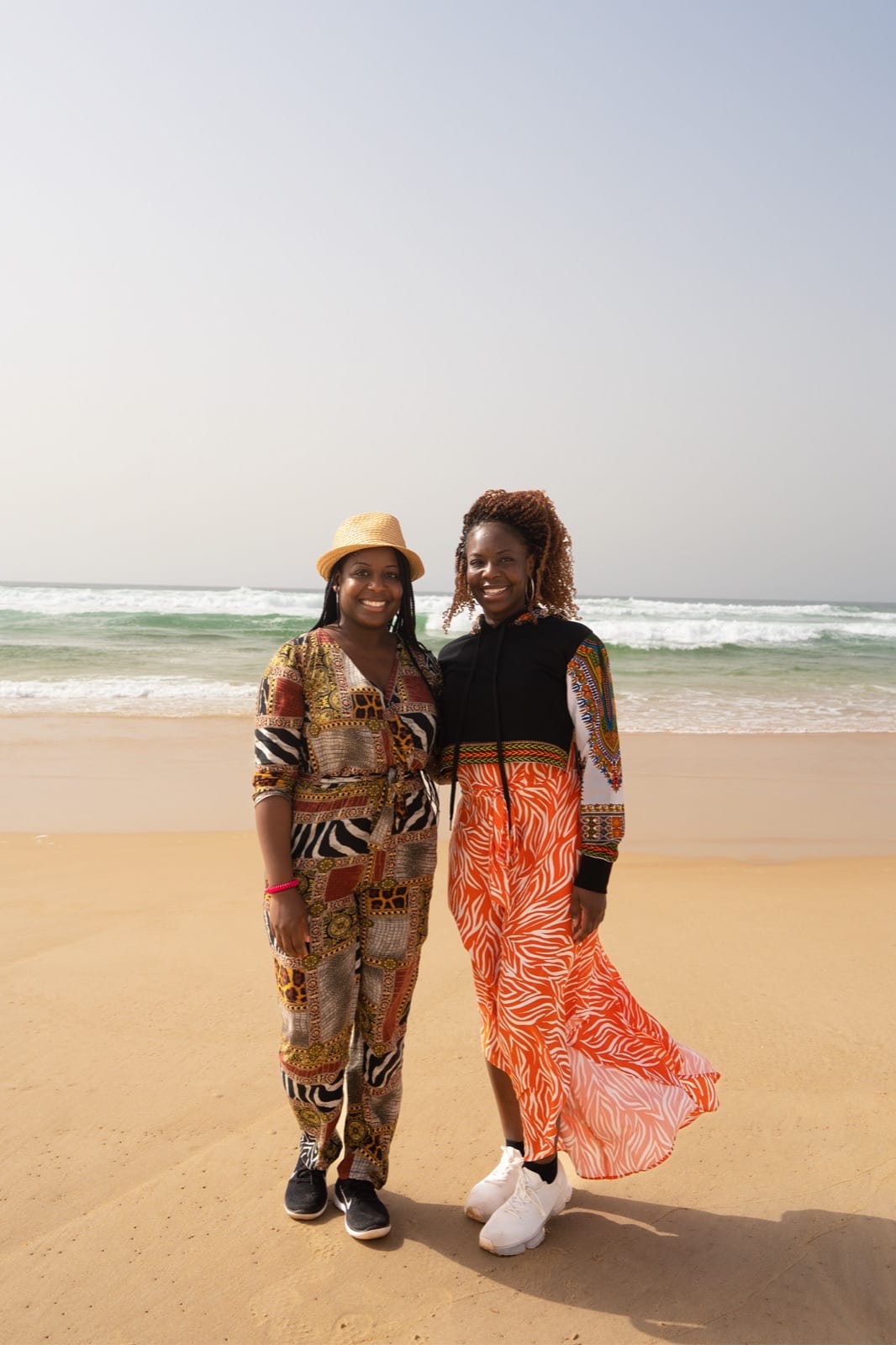 Photo: Simone Santos (@sithevision) for Caviar in the Air
Look at them. A patchwork-print jumpsuit with a straw hat, and a flowing print skirt with a cropped hoodie and white sneakers. Fun, covered, and the Atlantic right behind them.
 Photo: Simone Santos (@sithevision) for Caviar in the Air
And her. Head-to-toe orange, a white tank, a visor, mirrored sunglasses, gold hoops and white sneakers. That's how you stand in front of a baobab.
Have something made in Dakar
Dakar is a made-to-measure city. You buy the fabric at the market, take it to a tailor, and the tailor sews it to your measurements and the style you want. The boubou, a long, flowing robe with wide sleeves, is worn across West Africa, and in Senegal the most elegant ones are made from bazin, a polished cotton damask, often embroidered. Wax prints are the bold, patterned cottons you'll see all over the Medina.
So if a fabric catches your eye on the Medina tour, ask your guide or the hotel concierge about having something made: a boubou, a wax-print set or a bazin dress. Ask early in the week, give the tailor as much time as you can, and plan to wear it to the farewell dinner. Fabric and tailoring aren't included in the trip. Wearing something made for you in Dakar is a lovely way to bring Senegal home.
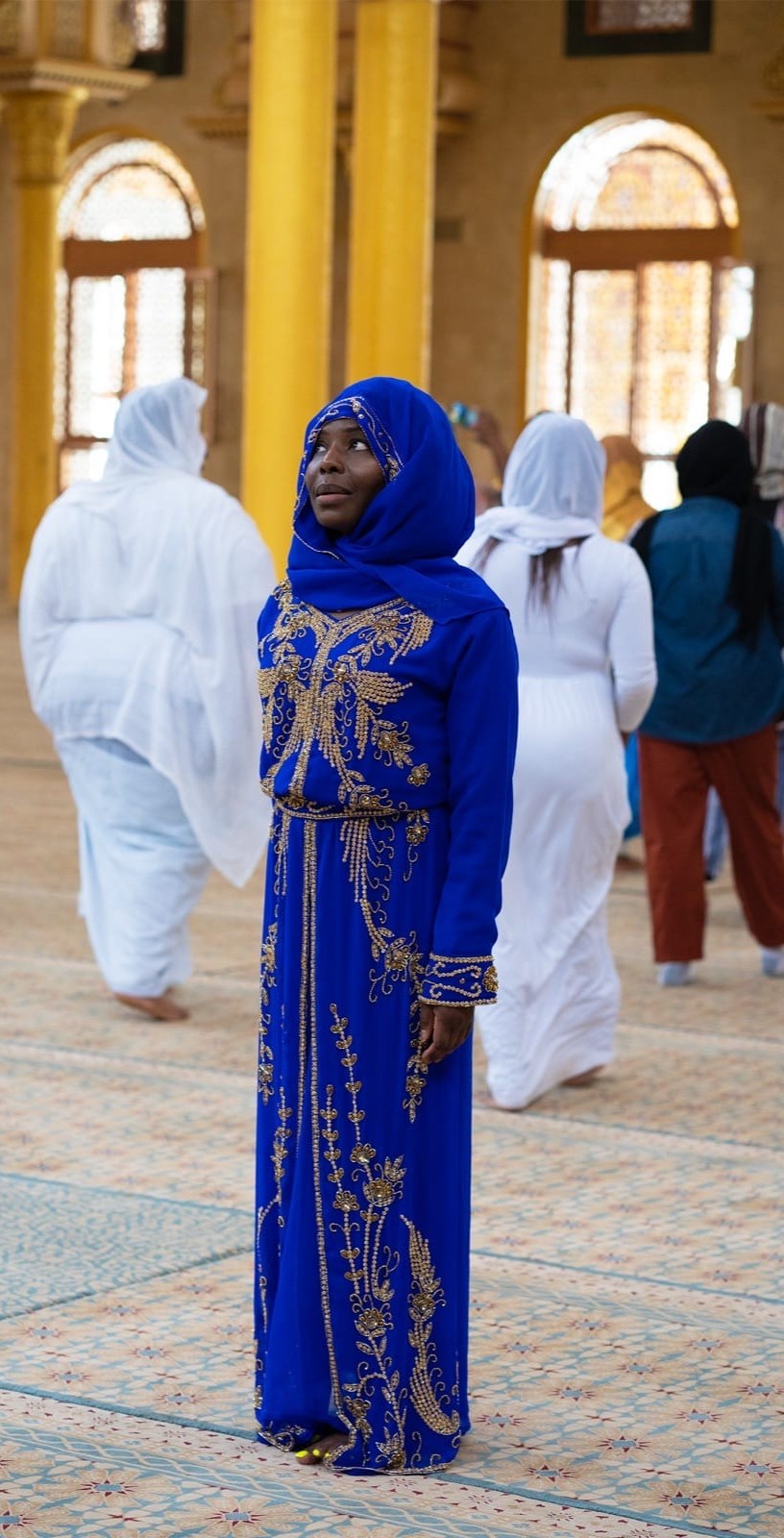 Photo: Simone Santos (@sithevision) for Caviar in the Air
Look at her. Royal blue, gold embroidery, a matching scarf over her hair, and bare feet on the mosque carpet. Respectful and regal at the same time.
Hair and skin notes from a big sister
Heat, sun, humidity, dust and salt water, all in one week. Here's how I'd handle it.
- Go in with a protective style. Braids, twists or a sleek bun. Get it done about a week before you fly.
- Plan for the humidity. Dakar's sea air can undo a silk press. Seal your ends with a light oil, use an edge control that holds in heat, and keep a satin scarf in your bag for the days the air wins.
- Wrap it for the dust. On safari and at the Pink Lake, tie a scarf over your hair in the truck. Dry, dusty air pulls moisture out of your hair, your skin and your lips.
- Hats rub. Pick satin-lined hats, or wear a thin satin scarf underneath.
- Protect your hair in the ocean and the pool. Wet it with fresh water and put in a leave-in conditioner before you swim, or wear a swim cap. Rinse with fresh water and condition after. Then do your full wash day routine at the hotel.
- Moisturize every day. A rich moisturizer, lip balm, and your bonnet at night. Wash your face at night after the dusty days, and pack eye drops if you wear contacts.
- Wear sunscreen every day. Pick one with no white cast, and reapply. The sun can darken spots on our skin even when the sky is hazy.
More hair tips for the road are in our Black hair travel guide.
Senegal Packing List for Women
This is my West Africa packing list for Senegal in April. Screenshot it.
Clothes
- Three or four pairs of loose trousers in linen or cotton
- Two or three long dresses or skirts, at least one with long sleeves for the mosque
- Four or five tops that cover your shoulders, some with long sleeves
- A light long-sleeve shirt for sun and dust
- One big, light scarf for your hair at the mosque, your shoulders and the dust
- A light cardigan, linen shirt or denim jacket for the evening breeze
- Sleepwear and underwear
Dinners
- A welcome dinner look, plus a wrap
- A farewell dinner look, or room in your suitcase for the one you have made in Dakar
Safari and the Pink Lake
- An all-white outfit for the lake, if you want the photo
- A loose shirt to wear over it in the truck
- A hat with a cord, or a visor
- Wipes
The resort
- Two swimsuits
- A cover-up
- A rash guard if you like one
- A small bag for wet things
Shoes
- Breathable closed sneakers, already broken in
- Sandals with a back strap
- Slip-on sandals for the mosque
- Slides or flip-flops for the pool
- Flat sandals or a low block heel for dinners
Sun, hair and skin
- A wide-brim hat and sunglasses
- Sunscreen with no white cast, and SPF lip balm
- Satin scarf or bonnet
- Leave-in conditioner, a light oil and edge control that holds in heat
- A swim cap if you want one
- A rich moisturizer, a gentle cleanser and eye drops
- Insect repellent
Your day bag
- A crossbody bag that zips
- A water bottle
- Tissues and hand sanitizer
- A phone with plenty of storage and a power bank
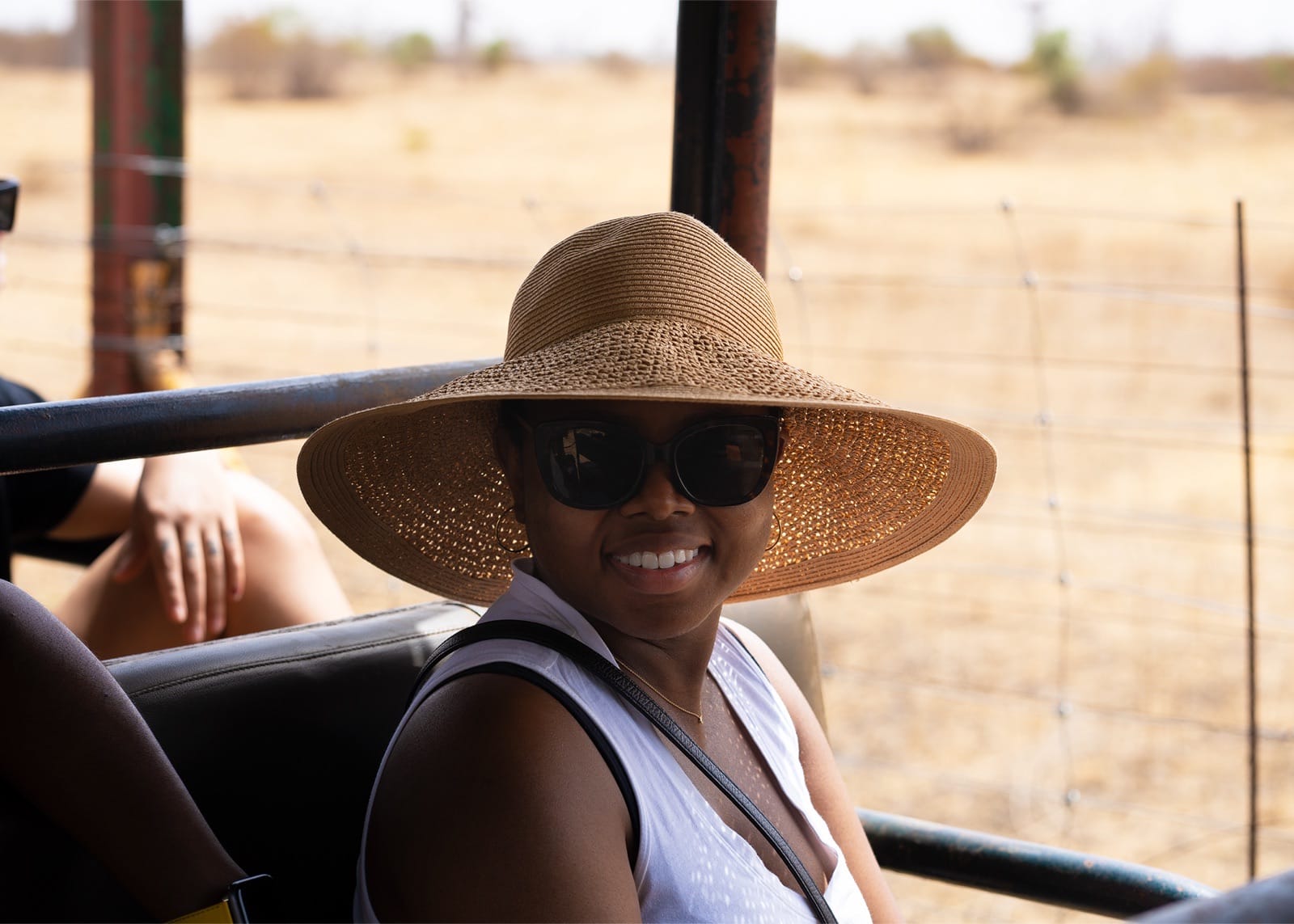 Photo: Simone Santos (@sithevision) for Caviar in the Air
A wide straw hat and big sunglasses do half the work on this trip.
Documents and money
- Passport valid at least six months past your arrival date
- Entry: U.S. citizens have entered visa-free for up to ninety days. Senegal announced a reciprocal e-visa in 2025, so check the U.S. State Department's Senegal page before you fly (as of October 2026). If a visa fee applies, it isn't included in the trip
- Yellow fever: a certificate isn't required if you fly in directly from the U.S. It is required if you arrive from, or spend more than twelve hours in transit in, a country with yellow fever risk. The CDC recommends the vaccine for travelers nine months and older, so talk to your doctor or a travel clinic, and carry your card if you get it
- Malaria: the CDC recommends prescription medicine to prevent malaria for travelers to Senegal. Ask your doctor
- Travel medical insurance, which our trip requires
- A credit card with no foreign transaction fees, and some local cash in West African CFA francs for tips and the market
- A plug adapter for types C, D, E and K (most outlets take two round pins), at 230 volts. Check that your hair tools are dual voltage
- Copies of your passport and insurance
- Your medications, in their original packaging
Come See Senegal With Us
Senegal in April is warm, dry and breezy, with a cool ocean and maybe a little dust in the air. You'll handle it. Cover up in town and at the mosque, wear good shoes on Gorée, keep a scarf for the dust, protect your hair from the sun and the salt, and wear white at the Pink Lake. Have something made in Dakar if you can. We'll take care of the rest.
If you want to see where every one of these outfits goes, read our day-by-day Senegal itinerary and my Senegal travel guide. Still deciding? Here's why Senegal should be your next trip. Then come with us. I'd love to see your color moment at the Pink Lake.
Claire B. Soares is the founder of Caviar in the Air. To her, Senegal is a heritage journey, from the city in Dakar to the coast in Saly.

 Travel Tips
 Travel Tips
 Travel Tips