My favorite kind of vacation is a safari. I get so excited about the elephants. But South Africa is never only the bush. In one trip you go from a welcome dinner in Johannesburg to the streets of Soweto, from a game vehicle at sunrise to the colors of Bo-Kaap, and from a ferry across Table Bay to a farewell table in the Winelands. That's four hotels, two climates and a lot of outfits. I got you.
What to wear on safari in South Africa: neutral, breathable layers in khaki, olive, tan, sand and soft gray, with long pants, a long-sleeved shirt for the sun, closed shoes, a hat with a strap and sunglasses, plus a fleece or warm jacket, a beanie and gloves for the early morning drives in an open vehicle. In the dry winter, Pilanesberg mornings average around 41°F (5°C) and days warm to about 68°F (20°C). In summer, days are warm with quick afternoon thunderstorms, so add a light rain jacket. Skip neon, bright colors and head-to-toe bright white.
Key facts
- Our trip: the eleven-day South Africa Experience is on a waitlist for 2027 and 2028, with a small group. Dates aren't set yet, so this guide covers both seasons. For the country beyond our trip, read my ultimate South Africa travel guide.
- The seasons are flipped. Summer runs roughly November to March, and winter roughly May to August.
- Johannesburg and Pilanesberg: summer is the rainy season, usually a fast afternoon thunderstorm and a bright rest of the day, with January highs around 79°F (26°C). Winter is dry and sunny, with days around 63°F to 73°F (17°C to 23°C) and nights near 39°F (4°C), with frost on the coldest mornings.
- Cape Town and the Winelands: the opposite. Winter, May to August, is cool and rainy, with highs around 64°F (18°C). Summer is dry, sunny and windy, with highs of about 77°F to 84°F (25°C to 29°C).
- The wind: Cape Town's strong summer southeaster is called the Cape Doctor. It blows mostly from October to March and picks up most afternoons.
- Malaria: Pilanesberg is one of the few malaria-free Big Five reserves in South Africa. Still talk to your doctor before you go.
- Entry: as of October 2026, U.S. citizens don't need a visa for tourist stays of up to ninety days. You need two consecutive completely blank visa pages in your passport (endorsement pages don't count), and a passport valid at least thirty days past your departure. Airlines check the pages at check-in. Check before you fly.
- Plugs and voltage: South Africa uses Type M, three large round pins, and the newer Type N, at 230V. Pack an adapter for both, and only bring dual-voltage hair tools. An adapter doesn't convert voltage.
What to Wear on Safari in South Africa
On the current itinerary, we drive from Johannesburg to Pilanesberg National Park, a malaria-free Big Five reserve inside an ancient volcanic crater, for two nights at Shepherd's Tree Game Lodge. Afternoon tea is on the deck at four, then your first game drive as the light turns gold. The next day starts with an optional 4:30 AM wake-up call, hot tea in the dark and a sunrise drive, then the pool at midday and a sundowner drive as the sky catches fire.
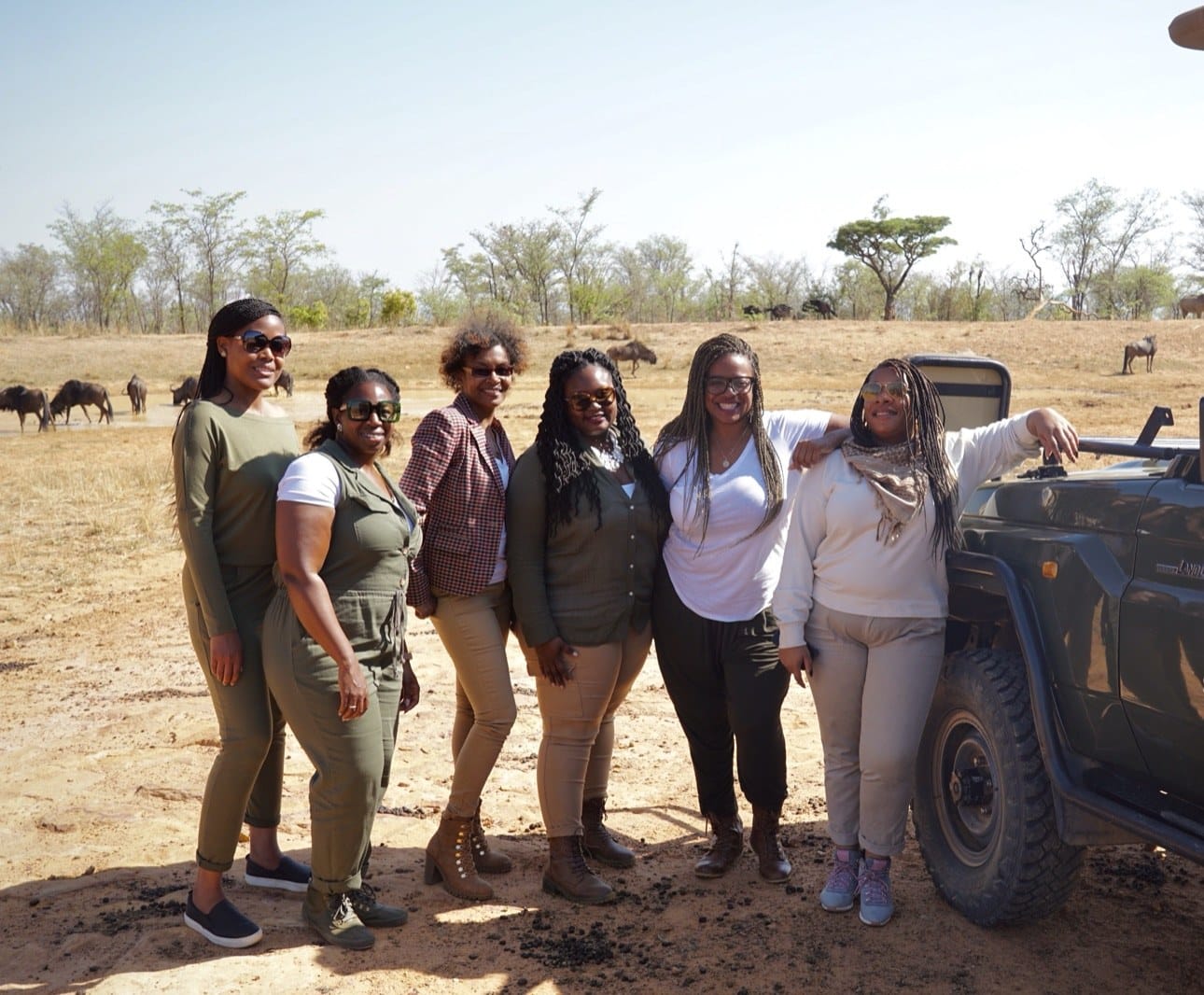 On safari in South Africa, on an earlier Caviar trip. Photo: Caviar in the Air
That's the safari uniform, done six different ways. An olive jumpsuit over a white tee. A check blazer with tan pants and lace-up boots. A cream sweater with a printed scarf. Nobody looks like anybody else, and everybody looks like they belong in the bush.
- Neutrals. Khaki, olive, tan, sand, brown and soft gray. They hide the dust, they don't startle the animals, and they look so good in photos.
- Skip neon, bright colors and head-to-toe bright white. A white tee under olive is fine. An all-white outfit collects every speck of red dust.
- About dark blue and black. You may have read that they attract tsetse flies. That's real advice in parts of East and Central Africa, but in South Africa tsetse flies are found only in the far northeast of KwaZulu-Natal, nowhere near Pilanesberg. Neutrals still make sense for the drives, because they forgive the dust.
- Long pants and long sleeves in breathable, tightly woven fabrics, for the sun in an open vehicle and the bugs at dusk.
- Layers. Drives start before sunrise and end after dark, and a moving open vehicle adds real wind chill. A tee, a long-sleeved shirt, a fleece, then a warm jacket in winter.
- Closed shoes. Sneakers or ankle boots. You'll mostly sit, but you'll step down onto the dirt for the coffee stop.
- A hat with a strap, sunglasses and a soft scarf for the wind and the dust.
 On safari in South Africa. Photo: Caviar in the Air
That's the coffee stop. Notice the shoes: lace-up boots, sneakers and slip-ons, all closed.
Winter mornings are no joke. In June, July and August, Pilanesberg mornings average around 41°F (5°C), and the drive makes it feel colder. Bring a beanie, gloves and a real jacket, not just a cardigan. Many lodges keep blankets on the vehicles, but dress like you won't need one. By midday it's around 68°F (20°C), and the layers come off one by one.
Summer is softer at dawn and hotter at noon. You'll still want a fleece for the sunrise drive. Keep a light rain jacket in a neutral color on the vehicle for the afternoon storms.
At the lodge, the dress code relaxes. A sundress or linen pants for afternoon tea, a swimsuit and cover-up for the infinity pool, and something soft with a warm wrap for dinner, because the bush cools off fast after dark. For what the days actually feel like, read what nobody tells you about safari.
Ask me about the elephants. I dare you.
What to Wear in Johannesburg and Soweto
We start with three nights at the Four Seasons Westcliff, up on a ridge with the city below. The first night is the welcome dinner at an open-fire grill house in one of the city's most stylish neighborhoods. Dress up: a silky midi, a sharp jumpsuit or wide-leg trousers with a statement top, gold earrings and a heel you can stand in. Johannesburg sits about 5,750 feet up on the Highveld, and evenings cool off fast, so bring a jacket. In winter, make it a real coat.
The next day asks something of you. We spend the morning walking Soweto with a guide who knows its streets, its history and its people from the inside, then share a braai, a South African barbecue, right in the neighborhood. In the afternoon we go to the Apartheid Museum, which gives the twentieth century its full weight.
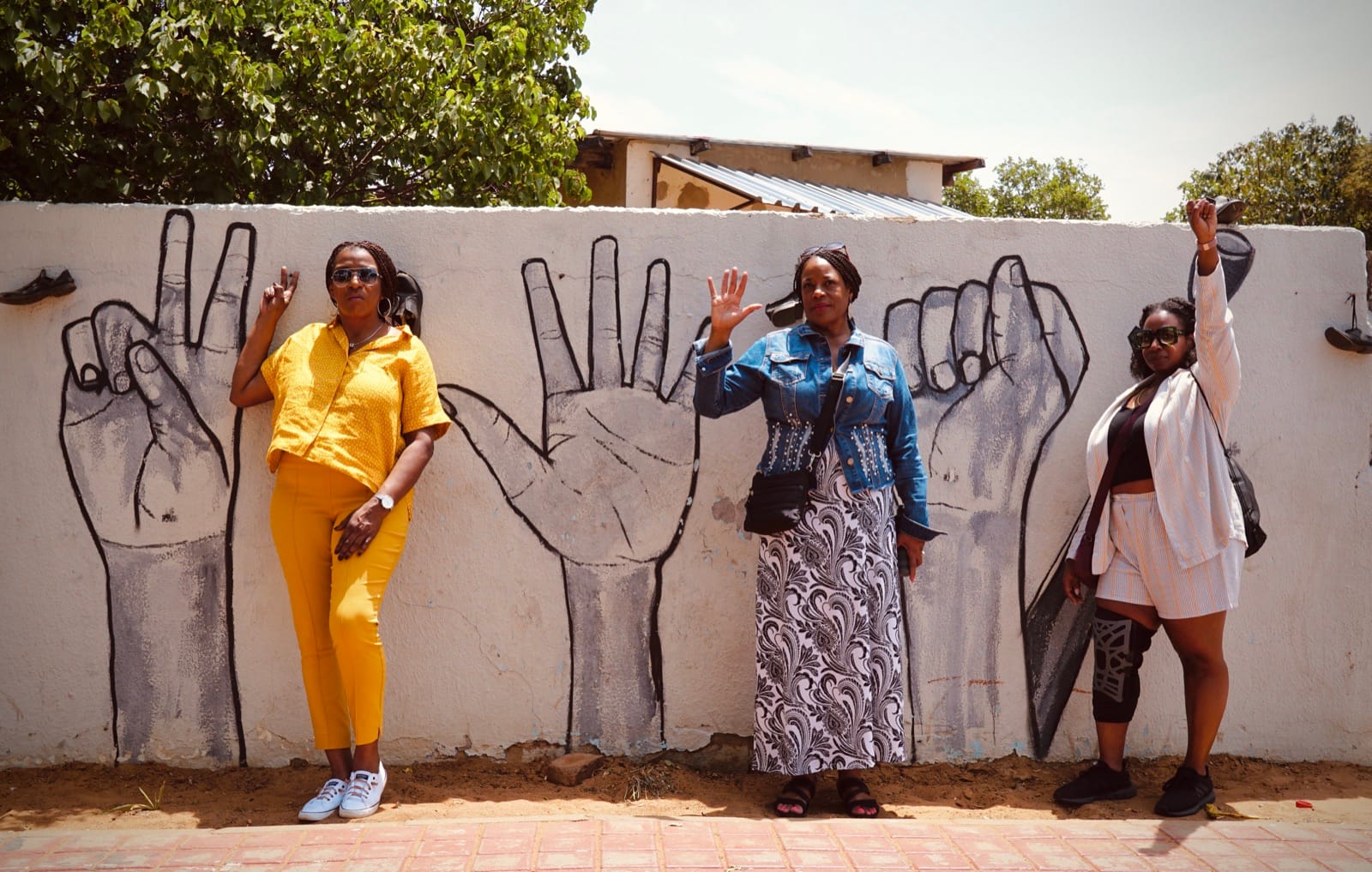 Photo: Caviar in the Air
That's three of our travelers in Soweto. Three very different looks, all of them right for the day: comfortable, easy to walk in and full of personality. For what this day meant to one traveler, read welcome back home to Soweto.
- Comfortable and modest. You're a guest in a neighborhood where people live, and the museum is a place of memory. Covered shoulders and a sensible hem are the respectful choice.
- Closed shoes you can walk in, for sidewalks and dirt.
- A crossbody bag that zips, worn in front.
- A layer, a hat and sunscreen. Highveld mornings can be cool, and at this altitude the sun is strong even in winter.
- Ask before you photograph people, and follow your guide's lead.
- Tissues. The museum is heavy, and that's the point. That evening is left open on purpose, so you can sit with it.
The third day is free. The spa, the pool, shopping, a long lunch, a nap: all correct answers. An inner-city walking tour is optional and not included, and if you add it, wear closed shoes and keep your bag in front. My honest advice is to not fill every free moment with another tour. For how I think about getting around the city, read is South Africa safe.
What to Wear in Cape Town
After the lodge, we fly south. Cape Town introduces itself with a twelve-minute helicopter flight along the shoreline, over Lion's Head, Clifton, Camps Bay and the Twelve Apostles range, and then three nights at the 12 Apostles Hotel and Spa, with the mountains on one side and the Atlantic on the other. For that travel day, wear dark jeans or wide-leg pants, a jacket and sneakers, and a hairstyle that won't mind the wind.
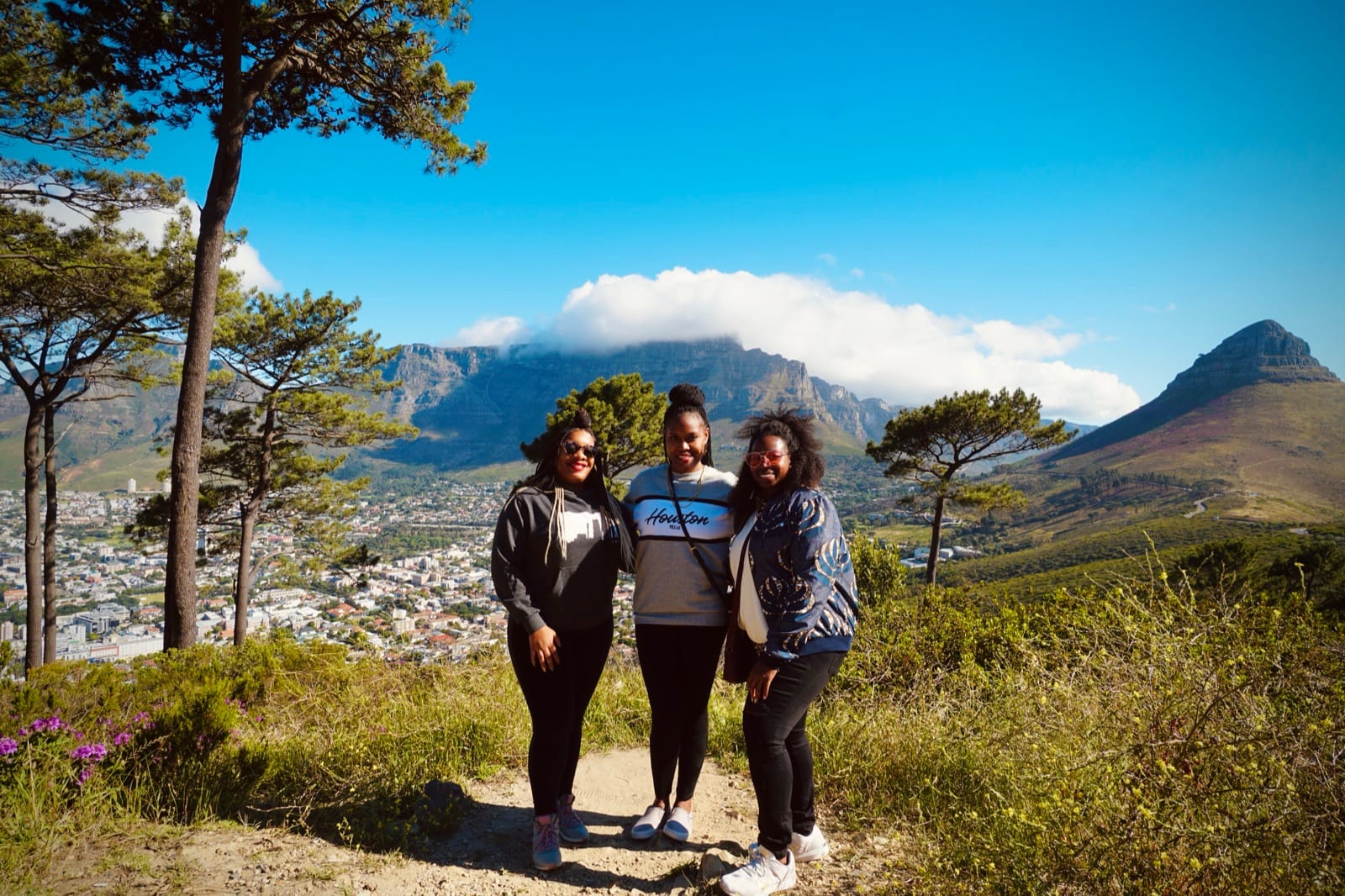
That's Cape Town dressing in one picture: a hoodie, a sweatshirt, a printed jacket, black pants and sneakers. That cloud on top of Table Mountain is called the tablecloth, and it rolls in when the southeaster blows. Cape Town changes its mind fast, so dress to add or drop a layer in a minute.
In summer, Cape Town is dry, sunny and windy. The Cape Doctor picks up most afternoons, so a dress that floats in the morning can be a problem by three. Choose midis with some weight, wide-leg pants and jumpsuits, and keep a light jacket with you, because the wind off the cold Atlantic cools things down fast.
In winter, cold fronts roll in off the Atlantic between May and August. Bring a waterproof jacket with a hood, a warm sweater and closed shoes that can handle a puddle. It's also green and gorgeous between the storms.
The second day is the full one, and one outfit has to carry you through it. The morning is a guided walk through Bo-Kaap, the Cape Malay quarter, a residential, mostly Muslim neighborhood with working mosques, where every house is painted a different color and the history underneath is older and heavier than the postcards let on.
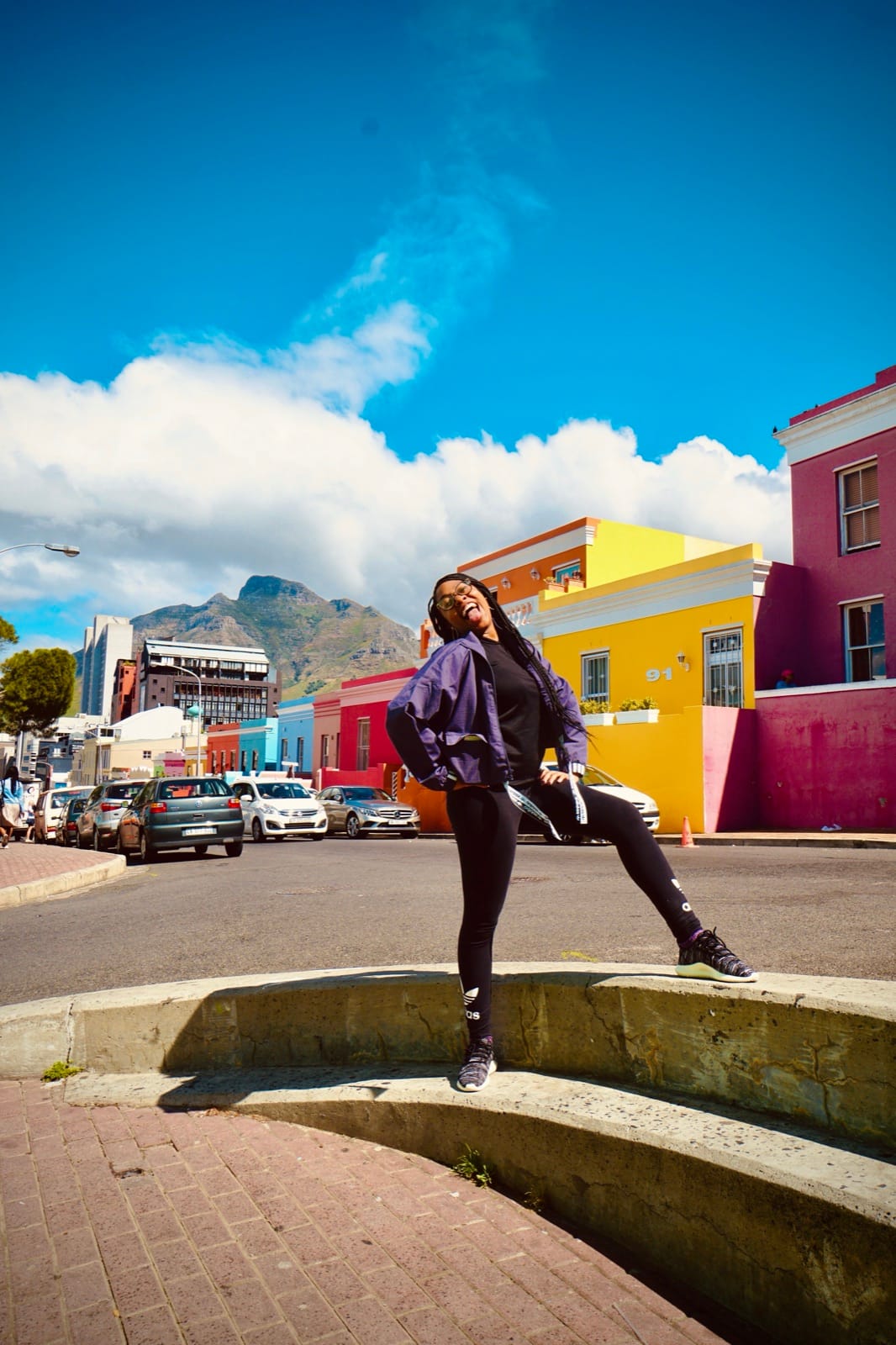 Photo: Caviar in the Air
I love the colors of Bo-Kaap, and so does she. A purple jacket, black leggings and sneakers, ready for a full day on her feet. Let the houses be the loud part, or match them.
- Shoulders and knees covered for Bo-Kaap, with a scarf in your bag in case the group stops at a mosque.
- Respect the homes. Don't sit on doorsteps for photos or photograph into windows.
- Washable clothes for the Cape Malay cooking class that follows. Short or fitted sleeves near the stove, closed shoes, hair tied back. Turmeric doesn't forgive.
- A warm, wind-proof layer for Robben Island. In the afternoon we take the ferry across Table Bay for a private tour of the island and the prison where so many of this country's freedom fighters were held. The crossing can be rough, the boat and island are exposed to the wind, and sailings can be cancelled in bad weather. Bring a jacket even on a warm day, and take something before you board if you get seasick. Anyone who would rather not cross can stay ashore at the waterfront.
The third day is free. The full-day Cape Peninsula tour with the Table Mountain cable car is optional and not included. If you add it, wear sneakers and bring a warm layer for the top of the mountain.
What to Wear in the Winelands
Then we head to Stellenbosch, where the mountains close in and the vines run to the horizon, for two nights at Lanzerac Wine Estate. First stop is a working cellar, with a tour through the barrels and a tasting.
- A layer for the cellar. Cellars stay cool even on a hot day.
- Darker colors or prints for tastings. Red wine finds white silk every time.
- Block heels, wedges or elegant flats. Lawns, gravel and old stone swallow stilettos.
- A hat and sunscreen in summer, when Stellenbosch is often hotter than the coast. In winter, a sweater and a rain jacket.
The next day is yours. Two add-ons are optional and not included: a tour of South Africa's Black winemakers and the estates they've built, and a long lunch at a chef's private home. For either, a breezy dress or linen set with flat sandals and a hat is perfect.
That night is the farewell wine pairing dinner at the hotel: several courses, a wine for each one, and a table full of people who were strangers ten days before. This is the dress-up night. A jewel-toned midi, a silky slip dress with a jacket or a great pantsuit, with gold and a heel you can walk on grass in, plus a wrap for the cool evening. And if there's a Pinotage on the list, that's my favorite red. Just saying.
South Africa Vacation Outfits for Black Women
South Africa is red earth, green vines, blue ocean and houses painted every color you can name, and rich color looks so good in that light. These are the South Africa vacation outfits for Black women that work, trip after trip.
- Olive and khaki with one personality piece, like a check blazer and lace-up boots, for the game drives.
- A cream sweater and a printed scarf, for a cold sunrise drive.
- A bold solid or a printed maxi with a denim jacket, for Soweto.
- A bright jacket, leggings and sneakers, for Bo-Kaap.
- A printed jacket and black jeans, for a windy Cape Town day.
- A silky slip dress and gold, for the welcome dinner.
- A jewel-toned midi and a wrap, for the farewell dinner.
Hair: dry Highveld air, dust on the drives, wind in Cape Town, spray on the ferry and rain if you go in the Cape winter. Braids, twists, locs and other protective styles hold up best, and a silk or satin scarf earns its place every day. Keep leave-in conditioner and edge control in your bag, sleep in a satin bonnet, and bring your own products, because you may not find your brand there.
Skin: wear sunscreen every day. The sun is strong at altitude and on the open vehicles, and the Highveld winter air is dry, so pack a rich moisturizer, lip balm and body oil.
Safari Packing List for South Africa
Four hotels in eleven days means you'll unpack four times, so packing cubes help. You'll also take a domestic flight to Cape Town, so check your airline's baggage allowance.
Safari
- Two or three pairs of long pants in khaki, olive or tan
- Three or four tops, including long-sleeved shirts
- A fleece and a warm jacket, plus a beanie and gloves in winter
- A light neutral rain jacket in summer
- A hat with a strap, sunglasses and a scarf or buff
- Binoculars and insect repellent
Cities and Winelands
- Three or four dresses, sets or wide-leg pants with tops, most covering shoulders and knees
- A modest outfit for Soweto, the Apartheid Museum and Bo-Kaap
- Something washable for the cooking class
- A wind-proof jacket, plus a hooded waterproof one for the Cape winter
- Dressy looks for the welcome dinner and the farewell dinner
- A swimsuit and a cover-up
Shoes
- Sneakers or ankle boots
- Flat sandals for the lodge and the pool
- Block heels, wedges or elegant flats for the dinners
Accessories, hair and skin
- A crossbody bag that zips and a wrap for the evenings
- Tissues for the Apartheid Museum
- Sunscreen, moisturizer, lip balm and your own hair products, with a satin scarf or bonnet
- Motion sickness tablets for the ferry, if you need them
Documents and tech
- A passport with two consecutive completely blank visa pages, valid at least thirty days past your departure
- Travel medical insurance details (required for our trip)
- A Type M and Type N plug adapter
- Dual-voltage hair tools only (South Africa runs at 230V)
- A portable charger and extra phone storage. You'll take more photos on the drives than you think.
Join the South Africa Waitlist
Our South Africa Experience is on a waitlist for 2027 and 2028. It's eleven days with a small group: the Four Seasons Westcliff in Johannesburg with a welcome dinner, Soweto with a braai lunch and the Apartheid Museum; Shepherd's Tree Game Lodge in malaria-free Pilanesberg with evening, sunrise and sundowner game drives; a helicopter flight, Bo-Kaap, a Cape Malay cooking class and a private Robben Island tour from the 12 Apostles Hotel and Spa in Cape Town; and a cellar tour and a farewell wine pairing dinner at Lanzerac Wine Estate in Stellenbosch. The Johannesburg inner-city walking tour, the Cape Peninsula tour, the Black winemakers tour and the chef's-house lunch are optional and not included. And you can join on your own. Your friends' calendars do not all have to agree.
Join the waitlist on the South Africa trip page, and we'll let you know when the dates are set.
Planning the rest? See the trip day by day in our eleven-day itinerary, read my ultimate South Africa travel guide and is South Africa safe, get ready for the bush with what nobody tells you about safari, and before Soweto, read welcome back home to Soweto.
Join the South Africa Waitlist →
Claire B. Soares is the founder of Caviar in the Air.

 Travel Tips
 Travel Tips
 Travel Tips